Chapters of a Day

1. As Pages Drift [16:46]
2. Chapters of a Day [27:30]
3. After the Stirring [7:52]
Gianni Mimmo: soprano saxophone
Silvia Corda: piano and sound objects
Adriano Orrù: double bass
All compositions by Mimmo, Corda, Orrù
Recorded live at Auditorium Fondazione Piacenza-Vigevano, Piacenza, Italy on February 22, 2025,
Sound engineer, mixing, mastering by Lorenzo Sempio, Interplay studio, Milano, Italy
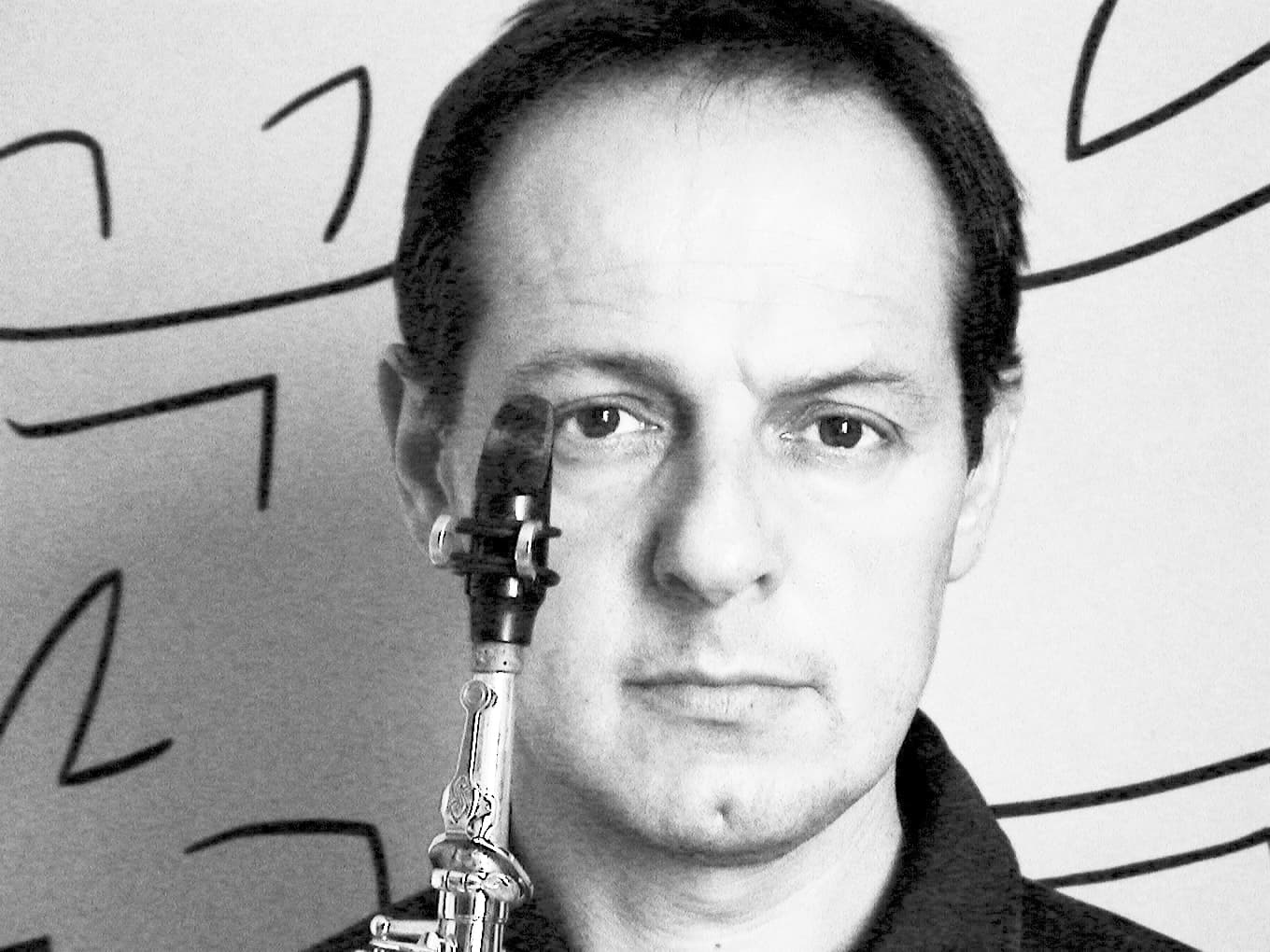
Cover photo: Hank Quinlan
Inside photo: Luciano Rossetti©PhocusAgency
Liner: Daniel Barbiero
Graphics: Nicola Guazzaloca
Production: Gianni Mimmo for Rosebud Relevant records
This album is respectfully dedicated to the memory of Mr. Artemio Cavagna, a true friend of our music and a sweet man.
Special thanks to Guido Lavelli for his warm friendship and organization and to Andrea Grossi for his precious help.
Clairvoyance is the purported ability to perceive beyond the perceptible—to see what isn’t visible, to hear what isn’t audible, to know what’s about to happen before it does. I don’t think we need to invoke something as exotic as extrasensory perception to acknowledge the exceptional form of communication that binds together the Clairvoyance Trio’s three members—soprano saxophonist Gianni Mimmo, pianist Silvia Corda, and double bassist Adriano Orrù--in improvising music of an exceptional balance and beauty.
Both as a soloist and an ensemble player, Mimmo is one of the contemporary soprano saxophone’s leading exponents. His is a lyrical voice even when experimenting at the edges of sound: a keen sense of melody always comes through. An instrumentalist with an expansive vision of what his instrument can do, Orrù understands pitch and timbre to be equal partners, whether he’s playing from the rich depths of the double bass’s lower register or skating along on a brittle sheen of bowed harmonics. Corda’s pianism is in many respects the binding agent through which the trio’s ability simultaneously to subsume and preserve its individual voices realizes itself in an ongoing construction of form in freedom.
The three tracks on this album, the group’s third, were recorded at the Auditorium Fondazione Piacenza-Vigevano on 22 February 2025. It was a memorable evening dedicated to the memory of the late Artemio Cavagna, a friend of the group. No wonder then that the music they played that night was strongly felt.
And as we’ve come to expect from them, it also was of the highest order. Although it was fully improvised it unfolds with a structural cohesion all the more remarkable for its not having been premeditated. We hear the group spontaneously construct complex, three-part counterpoint for saxophone, piano, and bowed double bass; converge on clearly articulated harmonies built on complementary multiphonics; weave variegated textures by rearranging themselves into shifting combinations of three, two, and single voices; pursue each other in parallelisms of rhythm and accent. There are moments of pure sound, as when Corda plays inside the piano or Orrù grinds the strings with pressured bowing, but the larger context within which these and other extended techniques appear keeps them musical. Throughout, as with their previous performances, the Clairvoyance Trio lives up to its name by demonstrating Mimmo, Corda, and Orrù’s uncanny, almost telepathic ability to anticipate each others’ lines and to complete each others’ thoughts. This is an ensemble of soloists finely attuned to each other through close listening and a shared quasi-compositional aesthetic.
Fully improvised music is an ephemeral art. Before it’s played it doesn’t exist; after it’s been played it no longer exists. It lives in the moment and once that moment is gone, it’s gone along with it. Fortunately for us, this set was preserved on a recording that allows us to re-experience Mimmo, Corda, and Orrù’s fine performance. It’s a performance that will reward repeated listens.
Reviews
Clairvoyance are an Italian improv trio featuring three accomplished improvisers: soprano saxophonist Gianni Mimmo, pianist Silvia Corda, and double bassist Adriano Orrù. The trio has already featured several times on diskoryxeion, first with their self-titled debut on Amirani in 2018, followed by their second CD, Transient, released by the same label in 2022.
There is, then, some history behind this ensemble, and clearly plenty of experience in live performance. With an improvising group, after all, the live encounter – whether in the studio or on stage – is fundamental. A familiar aphorism about improvised music has it that it exists only in the space between two forms of non-existence: before it is created, it does not exist; once it has been created, it is gone. What remains is the recording of music captured in the very act of coming into being, preserved on disc as a trace of that fleeting moment.
That is precisely what we have here with Chapters of a Day [RosebudRelevant, 2026], which documents Mimmo, Corda and Orrù live at the Auditorium Fondazione Piacenza-Vigevano on February 22, 2025. The performance is charged with passion, creativity and, above all, a palpable sense of invention. Their interaction unfolds across just three tracks: the 17-minute “As pages drift,” the 27-minute “Chapters of a day,” and the 8-minute “After the stirring.”
What is striking is how often these pieces take on the character of fully formed compositions. That is a testament to the depth of communication between the three players. The lyrical dimension emerges naturally alongside intensity, carefully calibrated noise, and a strong sense of freedom. Whether working as a collective, engaging in two-way exchanges, or moving into solo passages, Clairvoyance never lose their sense of proportion – or, crucially, their sense of rhythm.
That rhythmic awareness is particularly important in a music so open-ended: however spontaneous the performance, it retains an underlying sense of direction and form. The trio also makes intelligent use of the venue’s distinctive acoustics, allowing the space itself to become part of the music. In that sense, the auditorium functions almost as a fourth, invisible musician – one no less decisive than the three performers on stage.
Nel dipinto Le due sorelle di Felice Casorati si vedono due figure femminili, una vestita con un libro chiuso alla sua destra su un tavolino pensile, l’altra nuda con un libro aperto alla sua sinistra sistemato su un’altra base d’appoggio (vedi qui). Il quadro vuol produrre una profonda metafora della vita, una che sa riconoscere le azioni compiute all’interno di essa, perché la sorella vestita con il libro chiuso rappresenta la donna inserita nella società, nella cultura e soprattutto nelle convenzioni, mentre la sorella nuda e il libro aperto rappresentano l’innocenza del vissuto, il vivere fuori dagli schemi sociali e alla giornata. Mentre la sorella vestita è il simbolo della codifica, del sigillo delle abitudini, la sorella nuda è l’esposizione della ricchezza delle conoscenze perpetue, senza la maschera del ruolo sociale.
Abbiamo imparato che l’improvvisazione è un sistema che dura lo spazio in cui si compie, non c’è un ‘prima’ o un ‘dopo’, tutto si concentra nel momento e assomiglia ad una pagina che scorre come diario di un presente che è molto simile al libro della sorella nuda di Casorati. Questa condizione che sembra offrirsi alla vulnerabilità è esattamente il tesoro dell’improvvisazione libera, che si manifesta come una pagina aperta sulle molteplicità. Ho citato Casorati perché so che il sassofonista soprano Gianni Mimmo è un grande estimatore di questo pittore e nel progetto in trio Clairvoyance, con Silvia Corda al pianoforte e Adriano Orrù al contrabbasso, il mondo ideale di Casorati si raccorda benissimo con le sue conoscenze pittoriche.
Chapters of a Day è il nuovo CD che il trio ha appena pubblicato per Rosebud Relevant, l’ultima etichetta discografica creata da Mimmo, e contiene 3 pezzi che incorniciano un concerto che il trio ha fatto nello spazio dell’Auditorium di Piacenza di via S. Eufemia nel febbraio del 2025, un luogo che una volta era una chiesa barocca, ora sconsacrata e gestita da una fondazione; i tre musicisti si sono riuniti per ricordare la memoria del caro amico Artemio Cavagna e non potevano omaggiarlo meglio di così, con una performance eccellente che mette in evidenza aree di confluenza straordinariamente efficaci, in cui i tre musicisti sviscerano le loro qualità: in As Pages Drift, la seconda parte dell’improvvisazione è semplicemente stupenda con interventi non convenzionali, una fase che inizia con degli armonici sontuosi di Gianni, seguiti da un’escursione fisica nel pianoforte di Corda (ronzii e altre ‘espansioni’ sonore ottenute con oggetti); qualcosa di simile succede nella successiva title track, introdotta da un lungo, bellissimo assolo al contrabbasso di Orrù, frutto di tecniche che privilegiano una texture libera e percussiva (pizzicati, colpi con l’archetto e sul corpo dello strumento, etc.) ma perfettamente inserita in un paradosso d’insieme: non appena c’è la ricongiunzione Mimmo e Corda colgono al volo e sviluppano con tanta creatività quel clima speciale che si è creato e lo fanno con ulteriori stratagemmi estensivi. E’ incredibile come ci sia un affiatamento quasi innato tra i tre musicisti e, a mia memoria, non ricordo analoghi trii per sax soprano/pianoforte/contrabbasso così riusciti nella libera improvvisazione, in alcuni momenti sembra di assistere a composizione istantanea protratta al suo stato più puro e mimetico. Nella finale After the Stirring, gli interventi dei tre musicisti si fanno più dinamici e ossessivi, con un fraseggio pianistico dibattuto, il parossismo del soprano e la pulsione speculativa del contrabbasso.
Ciò che colpisce in questo nuovo lavoro del trio è l’incremento sempre più consistente dell’approccio sulle tecniche. C’è un ragionamento incisivo su come realizzare musica con le estensioni, c’è qualcuno che ne fa uso esclusivo usandolo come forma, altri che preferiscono mediare con strutture più tradizionali, altri che le detestano; nel caso di Mimmo-Corda-Orrù c’è la consapevolezza che le tecniche non convenzionali vanno usate nel modo e nel momento giusto accedendo come garanzia accessoria al suono e alle fasi di sviluppo dell’improvvisazione. E’ questo il vero volto della creazione musicale che non dobbiamo dimenticare (un monito anche ai compositori a non pensare acriticamente solo all’ottenimento di nuovi suoni) per essere in sintonia con la donna del libro aperto di Casorati: questa è una dimensione che contribuisce a non affievolire il carattere misterioso e imprevedibile di una personalità musicale (il trio) intenta a specchiarsi nel tempo e nell’esistenza, come succede a tutti coloro che cercano di sfogliare le pagine della propria vita giorno per giorno, senza soluzione di continuità.